

The most affordable Keurig coffee maker is available exclusively at Walmart and comes at a sweet price of only $59.00. In this article, you’ll find out how good it really is, and also find additional information like how to clean it, or do you need a water...
Why organic coffee might be the only way to save coffee
Why organic coffee might be the only way to save coffee
Why organic coffee might be the only way to save coffee
Why organic coffee might be the only way to save coffee
Why organic coffee might be the only way to save coffee
Why organic coffee might be the only way to save coffee
Here’s How to Change Keurig 2.0 Water Filter Easily
Not sure how to change Keurig 2.0 water filter? Here are step-by-step instructions that will help you do it quickly and easily. Keurig water filter should be changed every 2 months or 60 tank refills. The water filter is located inside the water tank, on the valve at...
Quick French Press Iced Coffee (No, It’s Not Cold Brew)
This is the absolute fastest way to make French press iced coffee. Just forget about cold brew concentrate – with this Quick French Press Iced Coffee Recipe you can have your iced coffee ready in 5 – 6 minutes. Who doesn’t like the French press?! It’s...
The coffee rose for assessing Anaerobic coffee
I just came across this really neat tool to assess anaerobic coffees. I haven't used it for cupping yet. I'm not sure I will like it either because the idea of lowering the score of the coffee just because it tastes has some thyme flavors. At the same time I...
Three US Coffee Championship Events Are Heading To Rancho Cucamonga
This article is from the coffee website Sprudge at http://sprudge.com. This is the RSS feed version. The 2024 US Barista Championship, Brewers Cup, and Cup Tasters will take place March 15-17 at Klatch Coffee Roasters in Rancho Cucamonga, California.
The Origin Story of Turtle Island Coffee in Vancouver, B.C.
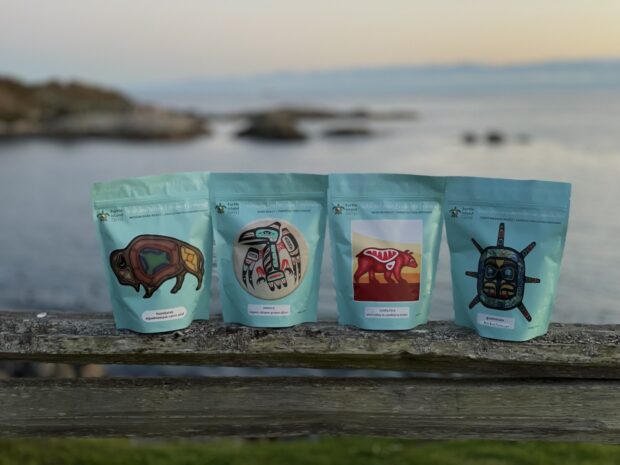
A new Indigenous-owned coffee company based in Vancouver, British Columbia, called Turtle Island Coffee has launched with the goal of exposing more people to high quality specialty coffee and Indigenous...
Get Ready for The Barista League’s 2024 Season
The Barista League has announced 12 competitions across four continents. BY J. MARIE CARLANBARISTA MAGAZINE ONLINE Photos courtesy of The Barista League When The Barista…
Get Ready for The Barista League’s 2024 Season
The Barista League has announced 12 competitions across four continents. BY J. MARIE CARLANBARISTA MAGAZINE ONLINE Photos courtesy of The Barista League When The Barista…
Get Ready for The Barista League’s 2024 Season
The Barista League has announced 12 competitions across four continents. BY J. MARIE CARLANBARISTA MAGAZINE ONLINE Photos courtesy of The Barista League When The Barista League announces new events, it’s worth paying attention! This year, the schedule will be...
Weekly Coffee News: EUDR and Africa + More Celebrity Coffee
Welcome to DCN’s Weekly Coffee News. Keep up with all the latest coffee industry stories and career opportunities by subscribing to DCN’s newsletter. Tell our editors about your news here. Report: Small-Scale Farmers in...
Do Higher Coffee Prices Mean More Money For Farmers? A Story From Sumatra Shows It’s Complicated
This article is from the coffee website Sprudge at http://sprudge.com. This is the RSS feed version. Since coffee costs more now than ever, do those coffee prices impact the amount of money earned by coffee farmers?
Coffee News Recap, 2 Feb: Applications open for Australia’s Richest Barista 2024, De’Longhi reports 4.6% revenue increase after La Marzocco move & other stories
Every Friday, Perfect Daily Grind rounds up the top coffee industry news from the previous week. Here are this week’s coffee news stories. The word of the week is: expansion. Mon, 29 Jan AeroPress launches limited-edition Clear Pink brewer. The coffee brewer is made...
Watch The 8 Best Coffee Videos Vying For Sprudgie Awards
This article is from the coffee website Sprudge at http://sprudge.com. This is the RSS feed version. The best coffee videos from 2023 featuring Cafe Imports, Aramse, Nguyen Coffee Supply, Wildly, Mirror Coffee Roasters, Alto Stories, Quek Shio, and Cafe Retiro.
Robusta is great and has untapped potential
I live in the US and my typical choice of coffee is lightly roasted Ethiopian pour overs. I generally love acidity and fruit flavors in my coffee. My experience with Robusta has often been poor. Very dark, roasty and maybe chocolatey. I participated in the Hoffman...
Design Details: Brewing Reinvented at ULA Café in Melbourne
Welcome to Design Details, an ongoing editorial feature in Daily Coffee News focused on individual examples of coffee shop architecture, interior design, packaging design or branding. If you are a coffee...
Robert Downey Jr.’s New “Happy Coffee” Is Really Depressing
This article is from the coffee website Sprudge at http://sprudge.com. This is the RSS feed version. Robert Downey Jr. and Craig Dubitsky team up for Happy Coffee.
Out Now: The February + March 2024 Issue of Barista Magazine!
In our new issue we feature Lisa Lawson from Glasgow, Scotland, take a look at the newest grinders, explore spring drink inspiration, see how more women are getting involved in coffee tech, and much more! BY SARAH ALLENBARISTA MAGAZINE We’re stoked to announce the...
The coffee industry’s biggest competition: The story of the World Barista Championship
Every year, the global coffee industry gears up for one of its most exciting and groundbreaking competitions: the World Barista Championship. For more than two decades, the WBC has been one of the biggest catalysts for change and innovation in specialty coffee, and...
The 2023 Specialty Coffee Transaction Guide Has Landed
The 2023 edition of the Specialty Coffee Transaction Guide (SCTG) guide went live today, providing actors throughout the coffee chain a data-driven tool for green coffee price discovery. The full...
Espro great until I needed replacement filter ☹️
I've had an Espro P7 for nearly four years after seeing glowing praise on this sub (to which I later contributed). Before I bought the P7 I looked at the replacement parts available and they seemed like a solid company in that they sold e.g. replacement filters...
New Bill Requires More Kona In Your Kona Coffee
This article is from the coffee website Sprudge at http://sprudge.com. This is the RSS feed version. Currently a coffee only need to be 10% Kona to be labeled as such.
What’s the best and worst part about owning and running a coffee shop?
I'm not interested in getting into it myself, as I have no experience in the service industry, no real appetite for risk and no desire to run a business in general. But sometimes I think about it and I wonder what's the most enjoyable thing about it and...
minimum dose size?
I use the Hario switch to brew my coffee and am trying to reduce my caffeine consumption. Hence I would like to brew smaller cups of coffee. I am currently using 10g of coffee with 160g of water. (1:16 Ratio) I am wondering if there is a minimum amount of coffee...
[CAFE OWNERS] Background before starting a shop?
I’ve worked in coffee for 6 yrs as a barista and shift supervisor and have passion for it. I’ve decided that I want to open my own place in the future and so I’ve been doing the research to make a business plan. Lately, however, I’ve begun to realize just how many...
Why organic coffee might be the only way to save coffee

When Death Wish Coffee Co. founder Mike Brown toured coffee farms throughout Peru two years ago, he could tell which ones were organic and which weren’t. He says the difference between the two was like looking at a meticulously cared-for lawn versus the front yard of a homeowner who’s been out of town for weeks.
“The coffee plants were much taller [on the organic farms],” Brown said. “There were strategically placed plants and trees to help with shade and pest control. They were just doing everything right.”

Brown believes the result is better coffee beans. He isn’t the only coffee fanatic to value organic: Almost 20 percent of the world’s organic permanent cropland is used to grow coffee (tied for the most of any crop). The amount of organic land being used to grow coffee has increased five-fold since 2004.
So why should you care that your favorite brand is 100 percent organic, from the ground to your grinder? Because it’s the best chance you have at continuing to enjoy top-notch coffee for years to come. Here’s why.
What makes organic coffee different?
Organic coffee is handled differently from conventional coffee at every stage of the process.
An organic coffee farmer must:
- Refrain from using most chemical pesticides, herbicides and fungicides (including for a three-year period before organic certification is granted)—see below for more details
- Submit to regular inspections to ensure compliance
An organic coffee roaster/seller must:
- Use only organic cleaning products on the machinery
- Use only organic pest-control products in and around the production facility
- “Flush” the machinery with organic coffee to be discarded if it’s used to process any non-organic coffee. (Editor’s note: Another reason Death Wish Coffee uses only organic beans—we never waste coffee!)
The result is that organic coffee is superior to conventional in terms of reducing risk to the people who grow it and to the environments in which it’s grown.

And if you value having an affordable, tasty, steady supply of coffee long into the future, protecting the environment is critical. A recent study found that if climate change progresses as forecasted, the world will see a 50 percent global reduction in areas suitable for growing coffee by 2050. (<-Editor’s note: Nooooo!!!)
How is organic coffee produced—and how is that different from the norm?
The beans that give coffee a smooth flavor—arabica beans—come from a tree that naturally grows best in the shade. In order to maximize profits, however, conventional, large-scale growers bred plants that could be packed together densely in the sun, where they grow faster.

The survival of those plants required the use of chemical fertilizers, herbicides and pesticides, at least some of which have been proven to have adverse effects on the environment and human health.
“I believe one of the biggest threats to environmental/human health in agrosystems (anywhere, really) is the fact that ecosystems are full of a combination of inputs and we have no idea how they interact or what their impact is, or how long they remain in the environment, continuing to interact,” said University of Michigan ecologist Julie Craves in an interview.
In order to be certified organic, a grower must refrain from using most chemicals entirely (though a limited number of chemicals may be used as a last resort).
“Therefore, it’s difficult to grow organic coffee in the sun,” Craves added. The environmental benefits of growing coffee in the shade, as nature intended, include reduced soil erosion, fewer weeds and a better-quality product.
What types of coffee beans can be produced organically?
Both arabica beans (the smoother, generally regarded as tastier ones) and robusta beans (the bolder, higher-caffeine ones) can be produced organically, and the Death Wish blend incorporates both types of organic coffee beans.

Robusta plants tend to be better able to withstand heat and humidity. However, they also contain a whopping 30 to 50 percent more caffeine than an arabica bean, which makes them a crucial component of the World’s Strongest Coffee.
“Robusta beans add that extra caffeine punch,” Brown says.
Where are most organic coffees grown?
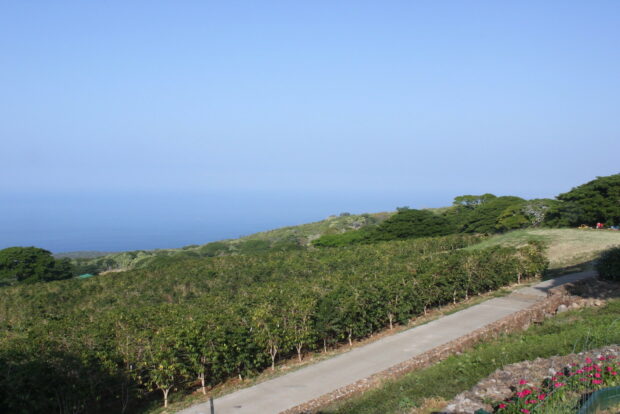
The countries with the most land dedicated to organic coffee production are Mexico, Ethiopia and Peru, countries also known for encouraging shade-grown coffee.
Other mostly shade-grown regions include Honduras, India and Guatemala.
Death Wish Coffee’s arabica beans come primarily from Peru, Guatemala and Honduras. Our robusta beans are typically from India or Mexico.
“The beauty of having a blend is, if we’re unable to get a certain coffee or a certain geographic area has a year where their beans aren’t as good, we’re able to roast and blend beans from other countries,” Brown says.
He credits his team of roasters for maintaining a consistently tasty and high-octane product throughout such changes.

Who determines organic certification?
Anything sold in the United States as organic (even if it was grown elsewhere) must be certified organic by the United States Department of Agriculture (USDA). Farmers seeking USDA organic certification must refrain from using banned chemicals on their land for three years before they’ll be accepted, according to Margaret Wilson, a media relations specialist at the organic advocacy nonprofit the Rodale Institute.
“Once that three years is completed and you have the seal, those products can be sold at a premium price, which then helps the farmer,” Wilson said in an interview. For coffee that is both Fair Trade and organic—as all the beans used by Death Wish are—the minimum price is $1.70 per pound, compared to $1.11 for conventionally grown coffee.
“Farmers also undergo regular inspections to make sure they’re complying with the standards,” Wilson said. “There’s really a system to make sure people who are saying they’re certified organic are really following the regulations.”
What are the benefits of organic coffee?
While the biggest reason to buy organic is to protect the people who grow your coffee and the places where it can grow, it may not be the only reason. The Rodale Institute is completing research on the nutrient density of organic versus conventional vegetables, research that could have implications that stretch to other crops.
It’s all about the soil, says Wilson: “Soil is a living, breathing organism in and of itself. It has all sorts of living networks that not only keep it bound together and help it absorb water, they also convey nutrients to the plants. When you use something like a fungicide, you’re killing off those networks in the soil. The plants can’t take those nutrients from the soil.”

Nature is what brought us the sacred elixir we call coffee, and it’s best to respect that power.
“Nature’s all in a balance, and when we bring in outside inputs and try to force nature into a certain box, it’s going to affect what you get,” Wilson said.