


This is the absolute fastest way to make French press iced coffee. Just forget about cold brew concentrate – with this Quick French Press Iced Coffee Recipe you can have your iced coffee ready in 5 – 6 minutes. Who doesn’t like the French press?! It’s...
Specialty coffee blends: How exciting can they be?
Specialty coffee blends: How exciting can they be?
Specialty coffee blends: How exciting can they be?
Specialty coffee blends: How exciting can they be?
Specialty coffee blends: How exciting can they be?
Specialty coffee blends: How exciting can they be?
I Tested Keurig K Compact – Here’s Everything You Need To Know
The most affordable Keurig coffee maker is available exclusively at Walmart and comes at a sweet price of only $59.00. In this article, you’ll find out how good it really is, and also find additional information like how to clean it, or do you need a water...
Here’s How to Change Keurig 2.0 Water Filter Easily
Not sure how to change Keurig 2.0 water filter? Here are step-by-step instructions that will help you do it quickly and easily. Keurig water filter should be changed every 2 months or 60 tank refills. The water filter is located inside the water tank, on the valve at...
The coffee rose for assessing Anaerobic coffee
I just came across this really neat tool to assess anaerobic coffees. I haven't used it for cupping yet. I'm not sure I will like it either because the idea of lowering the score of the coffee just because it tastes has some thyme flavors. At the same time I...
Three US Coffee Championship Events Are Heading To Rancho Cucamonga
This article is from the coffee website Sprudge at http://sprudge.com. This is the RSS feed version. The 2024 US Barista Championship, Brewers Cup, and Cup Tasters will take place March 15-17 at Klatch Coffee Roasters in Rancho Cucamonga, California.
The Origin Story of Turtle Island Coffee in Vancouver, B.C.
A new Indigenous-owned coffee company based in Vancouver, British Columbia, called Turtle Island Coffee has launched with the goal of exposing more people to high quality specialty coffee and Indigenous...
Get Ready for The Barista League’s 2024 Season
The Barista League has announced 12 competitions across four continents. BY J. MARIE CARLANBARISTA MAGAZINE ONLINE Photos courtesy of The Barista League When The Barista…
Get Ready for The Barista League’s 2024 Season
The Barista League has announced 12 competitions across four continents. BY J. MARIE CARLANBARISTA MAGAZINE ONLINE Photos courtesy of The Barista League When The Barista…
Get Ready for The Barista League’s 2024 Season
The Barista League has announced 12 competitions across four continents. BY J. MARIE CARLANBARISTA MAGAZINE ONLINE Photos courtesy of The Barista League When The Barista League announces new events, it’s worth paying attention! This year, the schedule will be...
Weekly Coffee News: EUDR and Africa + More Celebrity Coffee
Welcome to DCN’s Weekly Coffee News. Keep up with all the latest coffee industry stories and career opportunities by subscribing to DCN’s newsletter. Tell our editors about your news here. Report: Small-Scale Farmers in...
Do Higher Coffee Prices Mean More Money For Farmers? A Story From Sumatra Shows It’s Complicated
This article is from the coffee website Sprudge at http://sprudge.com. This is the RSS feed version. Since coffee costs more now than ever, do those coffee prices impact the amount of money earned by coffee farmers?
Coffee News Recap, 2 Feb: Applications open for Australia’s Richest Barista 2024, De’Longhi reports 4.6% revenue increase after La Marzocco move & other stories
Every Friday, Perfect Daily Grind rounds up the top coffee industry news from the previous week. Here are this week’s coffee news stories. The word of the week is: expansion. Mon, 29 Jan AeroPress launches limited-edition Clear Pink brewer. The coffee brewer is made...
Watch The 8 Best Coffee Videos Vying For Sprudgie Awards
This article is from the coffee website Sprudge at http://sprudge.com. This is the RSS feed version. The best coffee videos from 2023 featuring Cafe Imports, Aramse, Nguyen Coffee Supply, Wildly, Mirror Coffee Roasters, Alto Stories, Quek Shio, and Cafe Retiro.
Robusta is great and has untapped potential
I live in the US and my typical choice of coffee is lightly roasted Ethiopian pour overs. I generally love acidity and fruit flavors in my coffee. My experience with Robusta has often been poor. Very dark, roasty and maybe chocolatey. I participated in the Hoffman...
Design Details: Brewing Reinvented at ULA Café in Melbourne
Welcome to Design Details, an ongoing editorial feature in Daily Coffee News focused on individual examples of coffee shop architecture, interior design, packaging design or branding. If you are a coffee...
Robert Downey Jr.’s New “Happy Coffee” Is Really Depressing
This article is from the coffee website Sprudge at http://sprudge.com. This is the RSS feed version. Robert Downey Jr. and Craig Dubitsky team up for Happy Coffee.
Out Now: The February + March 2024 Issue of Barista Magazine!
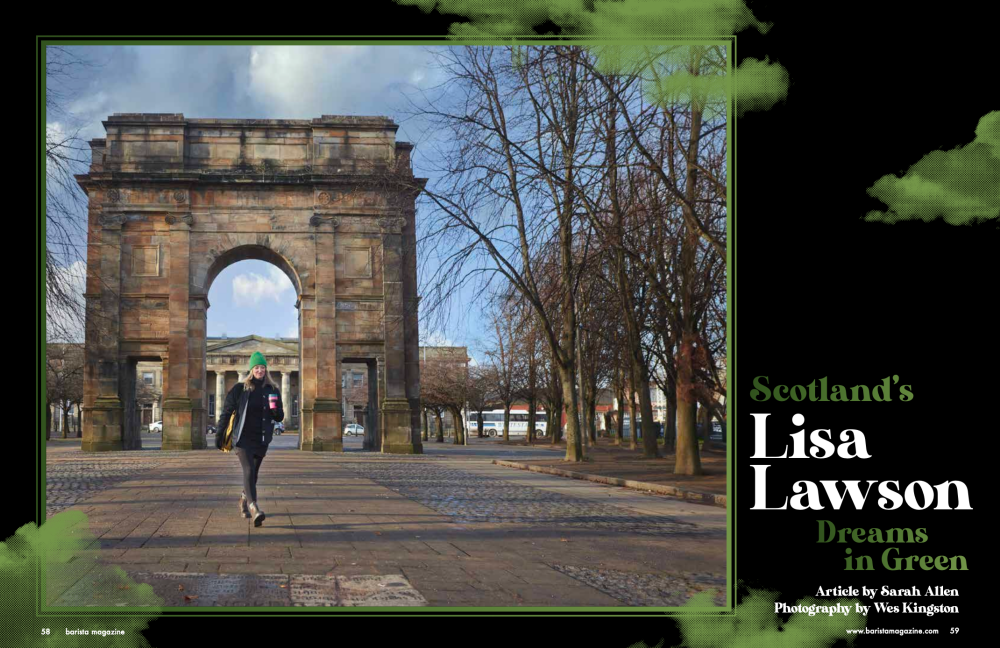
In our new issue we feature Lisa Lawson from Glasgow, Scotland, take a look at the newest grinders, explore spring drink inspiration, see how more women are getting involved in coffee tech, and much more! BY SARAH ALLENBARISTA MAGAZINE We’re stoked to announce the...
The coffee industry’s biggest competition: The story of the World Barista Championship
Every year, the global coffee industry gears up for one of its most exciting and groundbreaking competitions: the World Barista Championship. For more than two decades, the WBC has been one of the biggest catalysts for change and innovation in specialty coffee, and...
The 2023 Specialty Coffee Transaction Guide Has Landed
The 2023 edition of the Specialty Coffee Transaction Guide (SCTG) guide went live today, providing actors throughout the coffee chain a data-driven tool for green coffee price discovery. The full...
Espro great until I needed replacement filter ☹️
I've had an Espro P7 for nearly four years after seeing glowing praise on this sub (to which I later contributed). Before I bought the P7 I looked at the replacement parts available and they seemed like a solid company in that they sold e.g. replacement filters...
New Bill Requires More Kona In Your Kona Coffee
This article is from the coffee website Sprudge at http://sprudge.com. This is the RSS feed version. Currently a coffee only need to be 10% Kona to be labeled as such.
What’s the best and worst part about owning and running a coffee shop?
I'm not interested in getting into it myself, as I have no experience in the service industry, no real appetite for risk and no desire to run a business in general. But sometimes I think about it and I wonder what's the most enjoyable thing about it and...
minimum dose size?
I use the Hario switch to brew my coffee and am trying to reduce my caffeine consumption. Hence I would like to brew smaller cups of coffee. I am currently using 10g of coffee with 160g of water. (1:16 Ratio) I am wondering if there is a minimum amount of coffee...
[CAFE OWNERS] Background before starting a shop?
I’ve worked in coffee for 6 yrs as a barista and shift supervisor and have passion for it. I’ve decided that I want to open my own place in the future and so I’ve been doing the research to make a business plan. Lately, however, I’ve begun to realize just how many...
Specialty coffee blends: How exciting can they be?
Over the past year, it’s been impossible to ignore the rise of specialty coffee blends. Across the sector, more and more specialty roasters are adding a number of blends to their offerings, while a growing number of World Coffee Championship (WCC) competitors are using them as part of their routines.
However, despite this recent trend, it’s fair to say that the specialty coffee sector has largely favoured single origins for some time. This is for a number of reasons, but mostly because single origins are generally more traceable and associated with higher quality.
So, considering the growing preference for blends, it leads us to ask a pertinent question: how exciting can blends be for the specialty coffee sector?
To find out more, I spoke with the Head of Coffee at Coffee Planet, Cleia Junqueira, and founder and co-owner of Metropolis Coffee, Tony Dreyfuss. Read on to find out what they had to say about specialty coffee blends.
You may also like our article on whether blends are becoming more popular in specialty coffee.

Single origins vs specialty coffee blends
Before we break down blends, we must first understand single origins and the differences between the two.
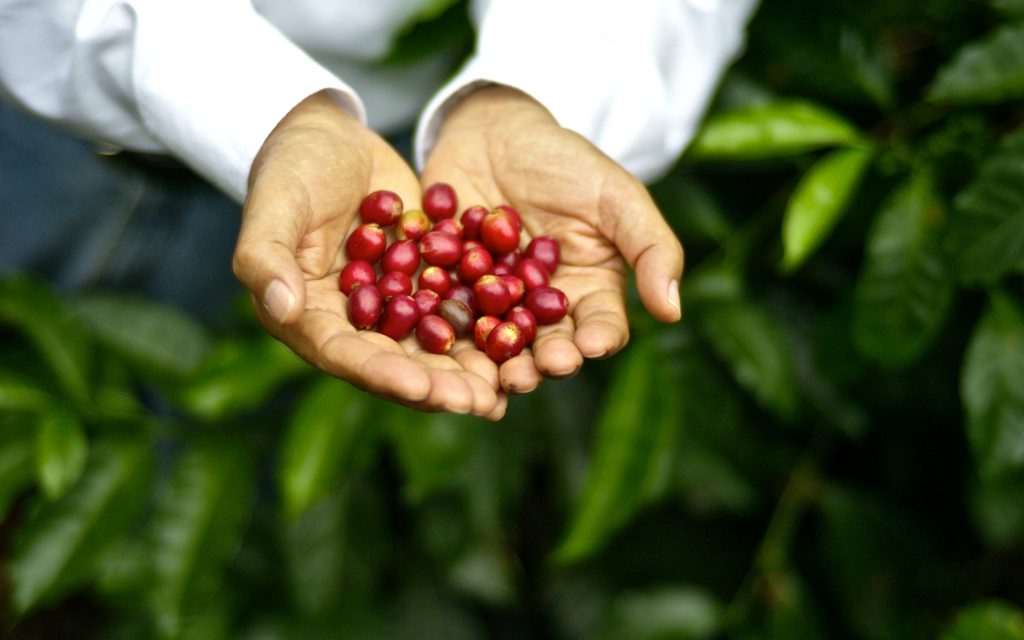
In simple terms, single origin coffees are sourced from one location – which can range from one country to one farm to a specific plot of land on a farm. Depending on the size of the plot, these can also be known as micro or nano lots.
Consequently, this means these coffees have more unique flavour profiles which express the characteristics of the terroir in which the coffees were grown, which includes altitude, soil quality, and climatic conditions.
For the most part, specialty coffee roasters and coffee shops have long since associated single origins with higher quality. The growing consumer demand for more traceable and ethical coffee has also had a role to play.
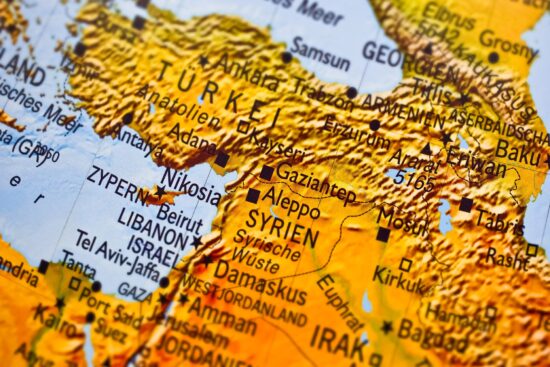
However, blends have been a part of the coffee industry since its beginnings. It’s believed that some of the first commercial blends included coffees from Yemen and Java. The former, which tends to be brighter and more well-rounded, would often be paired with heavier-bodied and more chocolatey coffees from Java – creating a more balanced-tasting coffee.
A blend contains two or more coffees, which can be combined before or after roasting – although the latter is often recommended to ensure even roast profiles.
No matter which coffees are used in a blend, they should be complementary to one another. For example, pairing a bright and acidic Kenyan coffee with a sweet and more fruit-forward coffee from Honduras can result in more overall balance.
Balancing flavour is important – and as well as in coffee, it has long been cited as an important factor in gastronomy, too. Cordon Bleu, one of the world’s leading culinary schools, explains that balancing flavour “is both a science and [an] art, based on professional training, intuition, and experience”.

Innovation with specialty coffee blends
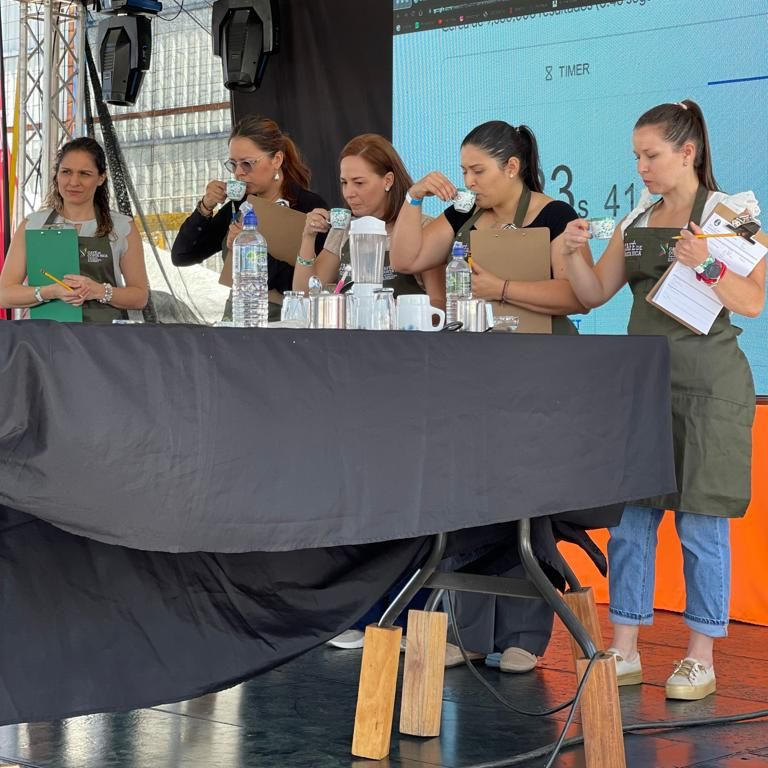
We typically associate blends with more traditional coffee drinkers who prefer consistency and more classic flavours like chocolate, nuts, and caramel. However, over the past year, more and more WCC competitors have been using blends – especially in the World Barista Championship (WBC) and World Brewers Cup (WBrC).
For many coffee professionals, these competitions are a platform to promote excellence and innovation in the coffee industry. In line with this, the majority of competitors choose to include single origin coffees as part of their performances, but the use of blends was most noticeable at the 2021 WBC and WBrC.
For instance, the 2021 World Brewers Cup Champion Matt Winton used a 60:40 blend of naturally processed Coffea eugenioides from Finca Inmaculada in Colombia and washed Catucai from Hacienda La Florida in Peru.
In his winning routine, Matt explained that when combined into a blend, the coffees produced more unique flavour notes like guava and raspberry, and created “a dance between acidity and flavour, body and sweetness – all the way from hot to cold”.
Meanwhile, Andrea Allen and Hugh Kelly, who respectively placed second and third in the 2021 WBC, both used blends which included eugenioides. In her routine, Andrea explained that eugenioides has very little acidity, but contains a high number of complex sugars, which led her to blend eugenioides with a Gesha in her espresso category.
In his routine, Hugh used a 50:50 blend of eugenioides and liberica for his milk-based beverages to bring out more of the coffees’ tropical notes.
At this year’s WBC, Japanese competitor Takayuki Ishitani – who placed fourth – used a blend of robusta and an anaerobic fermented Gesha. In his routine, Takayuki explained that this helped to balance the flavours and textures of the two coffees.

Why do roasters sell blends?
For the most part, blends have been used by many roasters to create more consistent and traditional flavour profiles, as well as controlling costs.
“Blends are [often] created for a specific kind of customer,” Tony explains. “As a roaster, blends allow me to layer different flavours and textures to create a bespoke product that can be marketed in a way that aligns with the brand’s values and ethos.
“The business then has a signature product which was created just for them,” he adds.
Seasonality is also an important consideration for roasters when creating blends. As it is seasonal, coffee is only available from certain origin countries at different times throughout the year, which means freshness also needs to be accounted for. However, it also means that a coffee’s sensory properties will always be slightly different from harvest to harvest.
In line with this, roasters can use blends as a way of creating repeatable and consistent flavour profiles. With the right approach, it’s possible to achieve consistency for any blend throughout the year.
Cleia, who tells me she works with more than 70 blends throughout the year at Coffee Planet, emphasises that paying attention to the acidity levels, balance, body, and flavour notes in each coffee is vital, as these characteristics can change within a few months.
“When you create blends, you have more flexibility, and you can create a more consistent-tasting product with a lot of value,” Cleia says. “Ultimately, with blends, the possibilities for roasters are infinite.”

So do specialty coffee blends help the industry?
It’s clear that blends have a number of benefits, especially for roasters and more traditional coffee drinkers, but how much value do they provide to the specialty coffee sector?
According to Tony, blends are an essential part of the coffee industry’s overall growth.
“Blends, when done well, can be used by roasters to show consumers that they understand their needs and preferences,” he says. “We need to listen to customers and create blends for them, not for ourselves.
“In doing so, we can grow the industry outside of an echo chamber,” he adds.
But ultimately, blends may become more of a necessary part of the specialty coffee sector, especially with the threat of climate change continuing to grow.
Experts predict that even if global carbon emissions are reduced in line with current commitments, coffee production will still rapidly fall in countries which account for around 75% of the world’s arabica supply. And with arabica accounting for around 70% of the coffee market, this puts many farmers at risk of becoming more economically vulnerable.
In line with this, adding higher-quality fine robusta to blends could be a solution, as well as using other coffee species which currently have very little market share. However, production volumes of the latter would need to increase significantly for this to happen, as they are currently too low to sell on a wider commercial scale.
Ensuring traceability and sustainability
When it comes to specialty blends, arguably one of the biggest concerns for both roasters and consumers is maintaining transparency across the supply chain. Now more than ever, consumers want to know where their coffee comes from and who produced it.
Historically, this has been more difficult with blends than for single origins, but there are a number of ways to combat these issues. Naturally, collecting data for traceability begins at origin, and more work needs to be done to support producers in storing this information – and it needs to be easier to make it available to other supply chain actors.
In turn, this could also mean that farmers receive higher prices for coffees which are sold as components of blends, as these could be traced as far back as an individual plot of land – thereby potentially adding more value.
“Producers grow a lot of different coffees,” Tony says. “The highest-quality coffees are typically sold as single origins, but this is a relatively small amount of coffee sold to a more niche market.
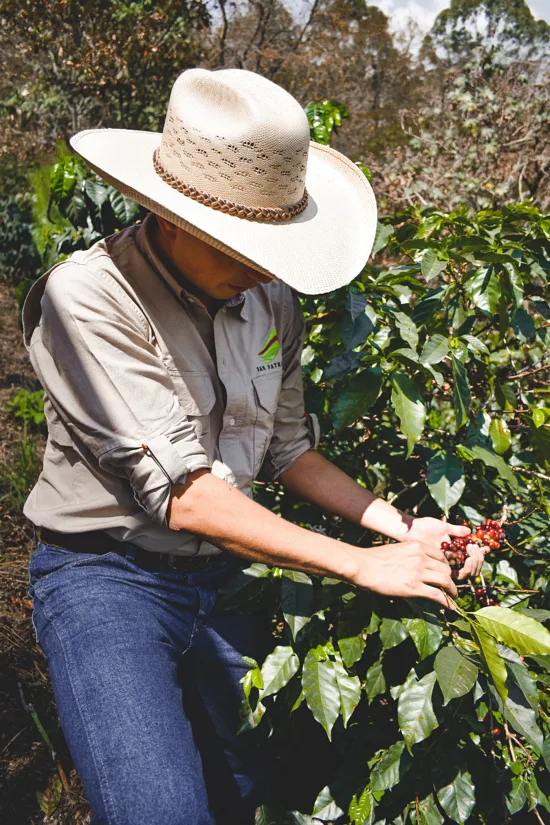
“The rest of the producers’ coffee is often mixed together and sold as blend components,” he adds. “For many farmers, this accounts for the majority of the coffee they sell.”
If grown using agricultural best practices, these coffees are likely to be high quality and have many desirable characteristics. However, recognition and transparency for farmers does need to be improved for blends.
“Producers deserve more recognition for these coffees, as well as a fairer price,” Tony tells me. “To label these coffees as inferior to specialty does a disservice to both the coffee itself and the producer.”
Whether a coffee is sold as a single origin or as part of a blend, traceability is a key factor. Roasters and green coffee buyers are clearly now expected to acquire, verify, and communicate this information accordingly.
“The specialty sector clearly enjoys more high-end coffees, but in order to be sustainable and to continue selling high-quality coffees, we also need to keep growing and selling less exclusive coffees,” Cleia concludes.

Blends have been a staple of the coffee industry for centuries, and will continue to be for the foreseeable future.
As part of this, it’s also evident that blends are becoming a vehicle for innovation in specialty coffee – and we’re seeing more high-quality, exclusive coffees used as part of them.
Whatever happens, in the years to come, it will become apparent just how important they are for driving the specialty coffee industry forward.
Enjoyed this? Then read our article on whether coffee roasters should add robusta to blends if arabica prices increase again.
Photo credits: Coffee Planet, Tony Dreyfuss, Jordan Montgomery
Perfect Daily Grind
Want to read more articles like this? Sign up for our newsletter!
The post Specialty coffee blends: How exciting can they be? appeared first on Perfect Daily Grind.