
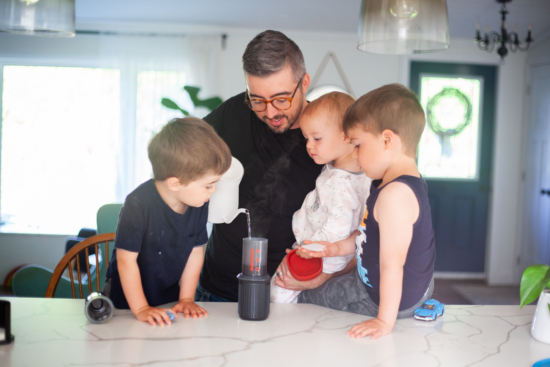

This is the absolute fastest way to make French press iced coffee. Just forget about cold brew concentrate – with this Quick French Press Iced Coffee Recipe you can have your iced coffee ready in 5 – 6 minutes. Who doesn’t like the French press?! It’s...
Digital Nomads, Part Three: Guest Etiquette in Your Café
Digital Nomads, Part Three: Guest Etiquette in Your Café
Digital Nomads, Part Three: Guest Etiquette in Your Café
Digital Nomads, Part Three: Guest Etiquette in Your Café
Digital Nomads, Part Three: Guest Etiquette in Your Café
Digital Nomads, Part Three: Guest Etiquette in Your Café
I Tested Keurig K Compact – Here’s Everything You Need To Know
The most affordable Keurig coffee maker is available exclusively at Walmart and comes at a sweet price of only $59.00. In this article, you’ll find out how good it really is, and also find additional information like how to clean it, or do you need a water...
Here’s How to Change Keurig 2.0 Water Filter Easily
Not sure how to change Keurig 2.0 water filter? Here are step-by-step instructions that will help you do it quickly and easily. Keurig water filter should be changed every 2 months or 60 tank refills. The water filter is located inside the water tank, on the valve at...
The coffee rose for assessing Anaerobic coffee
I just came across this really neat tool to assess anaerobic coffees. I haven't used it for cupping yet. I'm not sure I will like it either because the idea of lowering the score of the coffee just because it tastes has some thyme flavors. At the same time I...
Three US Coffee Championship Events Are Heading To Rancho Cucamonga
This article is from the coffee website Sprudge at http://sprudge.com. This is the RSS feed version. The 2024 US Barista Championship, Brewers Cup, and Cup Tasters will take place March 15-17 at Klatch Coffee Roasters in Rancho Cucamonga, California.
The Origin Story of Turtle Island Coffee in Vancouver, B.C.
A new Indigenous-owned coffee company based in Vancouver, British Columbia, called Turtle Island Coffee has launched with the goal of exposing more people to high quality specialty coffee and Indigenous...
Get Ready for The Barista League’s 2024 Season
The Barista League has announced 12 competitions across four continents. BY J. MARIE CARLANBARISTA MAGAZINE ONLINE Photos courtesy of The Barista League When The Barista…
Get Ready for The Barista League’s 2024 Season
The Barista League has announced 12 competitions across four continents. BY J. MARIE CARLANBARISTA MAGAZINE ONLINE Photos courtesy of The Barista League When The Barista…
Get Ready for The Barista League’s 2024 Season
The Barista League has announced 12 competitions across four continents. BY J. MARIE CARLANBARISTA MAGAZINE ONLINE Photos courtesy of The Barista League When The Barista League announces new events, it’s worth paying attention! This year, the schedule will be...
Weekly Coffee News: EUDR and Africa + More Celebrity Coffee
Welcome to DCN’s Weekly Coffee News. Keep up with all the latest coffee industry stories and career opportunities by subscribing to DCN’s newsletter. Tell our editors about your news here. Report: Small-Scale Farmers in...
Do Higher Coffee Prices Mean More Money For Farmers? A Story From Sumatra Shows It’s Complicated
This article is from the coffee website Sprudge at http://sprudge.com. This is the RSS feed version. Since coffee costs more now than ever, do those coffee prices impact the amount of money earned by coffee farmers?
Coffee News Recap, 2 Feb: Applications open for Australia’s Richest Barista 2024, De’Longhi reports 4.6% revenue increase after La Marzocco move & other stories
Every Friday, Perfect Daily Grind rounds up the top coffee industry news from the previous week. Here are this week’s coffee news stories. The word of the week is: expansion. Mon, 29 Jan AeroPress launches limited-edition Clear Pink brewer. The coffee brewer is made...
Watch The 8 Best Coffee Videos Vying For Sprudgie Awards
This article is from the coffee website Sprudge at http://sprudge.com. This is the RSS feed version. The best coffee videos from 2023 featuring Cafe Imports, Aramse, Nguyen Coffee Supply, Wildly, Mirror Coffee Roasters, Alto Stories, Quek Shio, and Cafe Retiro.
Robusta is great and has untapped potential
I live in the US and my typical choice of coffee is lightly roasted Ethiopian pour overs. I generally love acidity and fruit flavors in my coffee. My experience with Robusta has often been poor. Very dark, roasty and maybe chocolatey. I participated in the Hoffman...
Design Details: Brewing Reinvented at ULA Café in Melbourne
Welcome to Design Details, an ongoing editorial feature in Daily Coffee News focused on individual examples of coffee shop architecture, interior design, packaging design or branding. If you are a coffee...
Robert Downey Jr.’s New “Happy Coffee” Is Really Depressing
This article is from the coffee website Sprudge at http://sprudge.com. This is the RSS feed version. Robert Downey Jr. and Craig Dubitsky team up for Happy Coffee.
Out Now: The February + March 2024 Issue of Barista Magazine!
In our new issue we feature Lisa Lawson from Glasgow, Scotland, take a look at the newest grinders, explore spring drink inspiration, see how more women are getting involved in coffee tech, and much more! BY SARAH ALLENBARISTA MAGAZINE We’re stoked to announce the...
The coffee industry’s biggest competition: The story of the World Barista Championship
Every year, the global coffee industry gears up for one of its most exciting and groundbreaking competitions: the World Barista Championship. For more than two decades, the WBC has been one of the biggest catalysts for change and innovation in specialty coffee, and...
The 2023 Specialty Coffee Transaction Guide Has Landed
The 2023 edition of the Specialty Coffee Transaction Guide (SCTG) guide went live today, providing actors throughout the coffee chain a data-driven tool for green coffee price discovery. The full...
Espro great until I needed replacement filter ☹️
I've had an Espro P7 for nearly four years after seeing glowing praise on this sub (to which I later contributed). Before I bought the P7 I looked at the replacement parts available and they seemed like a solid company in that they sold e.g. replacement filters...
New Bill Requires More Kona In Your Kona Coffee
This article is from the coffee website Sprudge at http://sprudge.com. This is the RSS feed version. Currently a coffee only need to be 10% Kona to be labeled as such.
What’s the best and worst part about owning and running a coffee shop?
I'm not interested in getting into it myself, as I have no experience in the service industry, no real appetite for risk and no desire to run a business in general. But sometimes I think about it and I wonder what's the most enjoyable thing about it and...
minimum dose size?
I use the Hario switch to brew my coffee and am trying to reduce my caffeine consumption. Hence I would like to brew smaller cups of coffee. I am currently using 10g of coffee with 160g of water. (1:16 Ratio) I am wondering if there is a minimum amount of coffee...
[CAFE OWNERS] Background before starting a shop?
I’ve worked in coffee for 6 yrs as a barista and shift supervisor and have passion for it. I’ve decided that I want to open my own place in the future and so I’ve been doing the research to make a business plan. Lately, however, I’ve begun to realize just how many...
Digital Nomads, Part Three: Guest Etiquette in Your Café
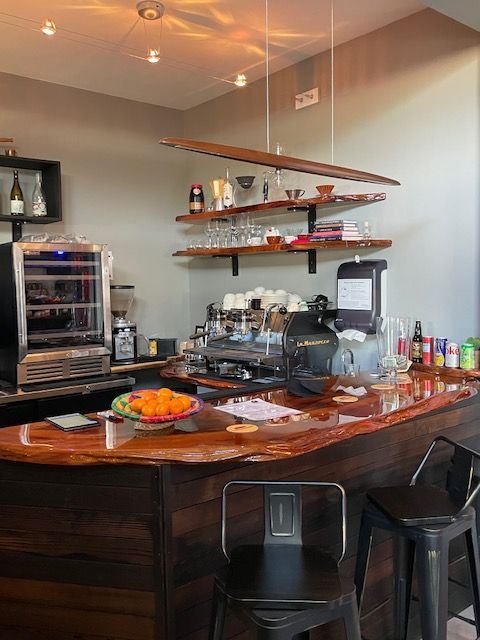
As more people work remotely, they may be setting up shop in your coffeehouse. Here are some tips to encourage good guest behavior.
BY TANYA NANETTI
SENIOR ONLINE CORRESPONDENT
Feature photo by Tanya Nanetti
Editor’s note: This is the third installment in our “Digital Nomads“ series; if you missed them, please check out parts one and two.
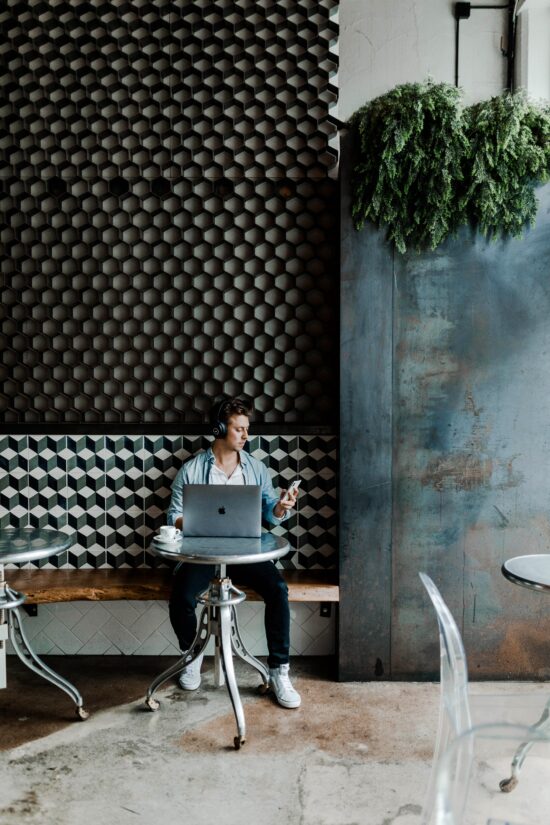
Digital nomads—those who work outside of a traditional office—are now more common than ever. Dedicated co-working spaces arise at every corner, but libraries, dining rooms, hotel lobbies, and other impromptu locations host at least a few digital nomads on any given day. And of course the most popular digital nomad working location in your community may very well be your coffee shop.
While until a few years ago it seemed as though most coffee shops were willing to host digital nomads without any kind of limitations, now things are starting to change drastically, and many coffee shops are altering their policies. Take Swork, for example, which opened more than two decades ago as the first coffee bar in Los Angeles to provide a dedicated computer-driven workspace, but has recently rebranded while changing its format to ban laptops.
Have digital nomads gone from a blessing to a curse?
While customers are essential for a successful coffee business, what if the customers aren’t actually customers? Coffee shop owners often struggle to earn enough profits to support their businesses when they’re crowded by people sitting all day working remotely.
But it is not just a matter of crowds—many other aspects can influence the decision between welcoming or forbidding the presence of digital nomads. Do they consume enough to support the coffee shop? Are they respectful toward the business? Are they polite with other customers? Basically, is their presence a help for the business, or is it just a burden?
Basic etiquette is essential
To help the relationship between digital nomads and coffee shops, it may be helpful to post a basic “Coffee Shop Working Etiquette“ statement in a visible location. Largely following common sense practices and not so different from any co-working space etiquette, this statement can be based on a few easy rules that can help clarify the relationship between the shop and its digital nomad customers. Let’s look at some of those rules now:
Rule One: Find the right place for you to work.
Ideally, customers would use one of the many apps or websites available to find welcoming spaces for laptops and drop-in working. But barring that, once they’ve arrived at your shop, encourage customers to check out your rules. Signage can help point customers to tables where laptops are allowed, for example, but baristas should also be ready and able to answer questions.
Additionally, if your shop has guidelines that change throughout the week, make the rules clear and visible to everyone. Is there a designated laptop area? Is it Sunday and the shop doesn’t allow digital working on weekends? Is there a maximum stay? Or maybe you’ve just changed the rules and laptops are no longer allowed? All rules and guidelines should be posted. If customers have any questions, a quick chat with their friendly barista should be enough to help them understand what’s going on in the shop.
Rule Two: Pick off-peak hours.
A coffee shop always has busier and slower times of the day. Maybe your shop is slammed at breakfast time or has a lunch rush. Encourage people to limit their times at tables when your place is packed. You can encourage digital nomads to visit at off-peak hours by promoting drink specials like free drip refills for slower times of the day, or by extending the period of time that tables can be occupied when the store is normally at its least busy. These rules can help digital nomads know when they should feel free to work in your shop, but also demonstrate that yours is an existing business with other customers who also deserve your attention and service.
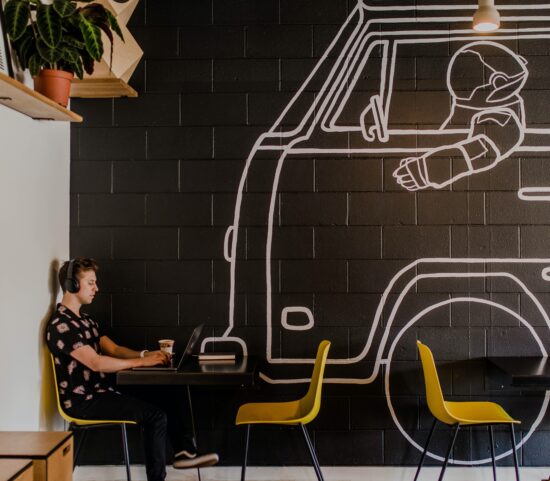
Rule Three: Support the business (and don’t forget to tip your barista!).
If digital nomads want to set up shop in your shop, it’s perfectly reasonable to require them to make purchases. It’s also OK to set minimums for how long anyone can work in your shop without making another purchase. If someone is just spending 10 minutes checking email, a cup of coffee or a soft drink may be a big enough purchase to justify them hopping on your Wi-Fi. If they’re settling in with a laptop, however, and they’re going to spend all morning in your café, it’s also OK to set a spending limit, a time limit, or both. Again, the baristas should be able to explain any rules, and you should have signage either posted or available through a QR code that gives customers all of the details.
All of these rules may seem difficult to enforce, but they also demonstrate to your customers and digital nomads that your shop is there to serve all of them in the best manner possible, while also allowing you to stay in business. Customers who don’t buy anything aren’t customers at all.
Rule Four: No videos, music, or phone calls without headphones.
It’s understandable that people like to listen to music or check out a video when they’re working. But if they’re working in your shop, it’s also OK to tell your customers that they can only do that if they have headphones. The only music anyone should hear in a coffee shop is the music the shop is playing on its sound system. It’s the same with videos—no one wants to listen to another person’s computer or phone content, and it’s easy to use headphones instead.
Additionally, no one needs to join a Zoom meeting from your shop. Your shop is a place of business serving a variety of customers. If a digital nomad wants to participate in a video conferencing call, they should do it from a different location..
Rule Five: Be considerate.
Digital nomads may be welcome at your shop along with other remote workers and your regular customers. Everyone is coming into your space, and they should follow your rules. And perhaps the most important rule of all is the simplest one: be considerate.
Your customers should be considerate of you, your employees, and your space. They should also be considerate with each other. Your shop is a social space where people will need to interact with your staff and each other. All of those interactions ought to occur with politeness and kindness. If customers are being problematic, you should ask them to leave. If digital nomads are taking up too much table space, you can ask them to pare it back. You can let them know you’re happy to have them as a customer, but you have other customers too, and they all need a little space.
Common decency and respect may be in short supply in other places in the world, but they don’t have to be in your café.
ABOUT THE AUTHOR
Tanya Nanetti (she/her) is a specialty-coffee barista, a traveler, and a dreamer. When she’s not behind the coffee machine (or visiting some hidden corner of the world), she’s busy writing for Coffee Insurrection, a website about specialty coffee that she’s creating along with her boyfriend.
The post Digital Nomads, Part Three: Guest Etiquette in Your Café appeared first on Barista Magazine Online.